
Postcard from the field: Supporting outbreak preparedness in South Sudan - two EPIET fellows in the field
In July and August, two fellows from ECDC’s long-standing European Programme for Intervention Epidemiology Training (EPIET) were deployed to South Sudan through the EU Health Task Force (EUHTF) and WHO’s Global Outbreak Alert and Response Network (GOARN), to support the country’s Ebola preparedness and strengthen surveillance.
South Sudan’s health system has limited laboratory and workforce capacity and a heavy reliance on support from humanitarian organisations, NGOs and the United Nations. The country is also facing multiple health challenges while needing to prepare for the possible spread of Ebola (Bundibugyo virus) from the outbreak in the neighbouring Democratic Republic of the Congo (DRC).
The precarious security situation in the country makes it challenging to deliver healthcare while staying safe. Linda and Antonia therefore had to follow strict UN security protocols.
What did an ordinary day look like for you during your deployment?
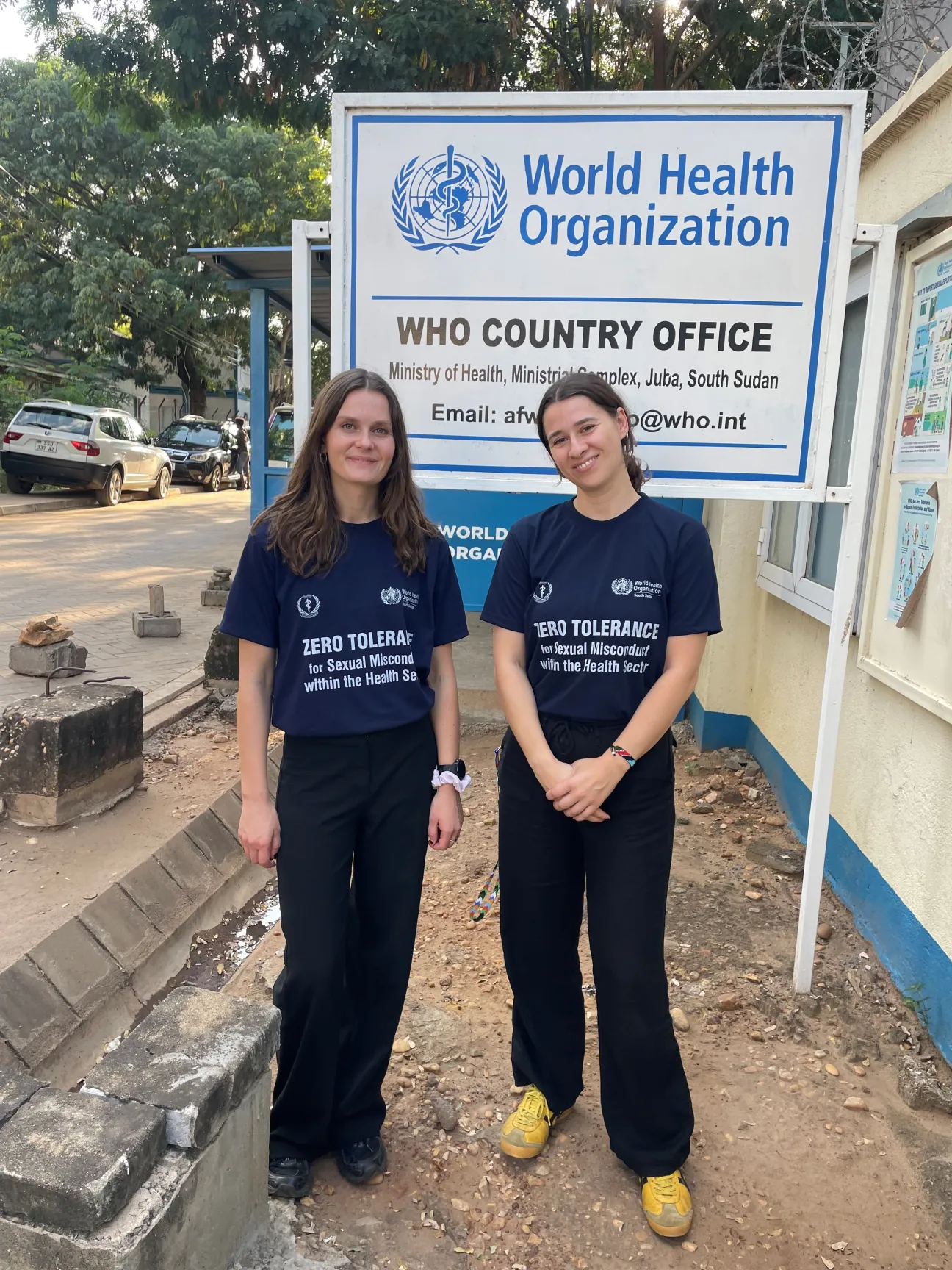
Linda Adamíková: ’Our tasks were quite varied and could also change daily. We were working closely with our colleagues, trying to identify gaps in surveillance and preparedness and working together to find solutions. We were also preparing a dashboard for local colleagues to visualise data that they're collecting and show how to use it in their analyses.’
Antonia Genath: ’Our main task was a big one: to look at the whole surveillance chain. So from detecting a possible case to then being able to report it, investigate it, and test it. And then, if a case was confirmed, to also identify and follow any of the case contacts. As there were thankfully no confirmed cases, we were looking at whether those systems were ready and how they could potentially be improved. We were also tasked with digitalising those systems and giving them a structure.’
Did you work alongside South Sudanese colleagues?
Antonia: ’Yes, there was a good balance of international and local staff and that was very valuable, because it took some time for us to get familiar with the context and with the system. It was really helpful to talk to the more experienced local colleagues. They were super supportive in making us feel more confident in working in the new context.’
Linda and Antonia also spent a week in Yambio, in Western Equatoria State, one of the priority areas for Ebola preparedness due to its proximity to the border with DRC. One of their most important tasks there was to support the rollout of Go.Data, a digital tool used for outbreak investigation and contact tracing. They developed training materials, configured the software on mobile devices and trained colleagues who could pass the knowledge on within their own organisations. They also visited health facilities and an Ebola treatment centre, and spoke with local health authorities and other partners. This gave them an opportunity to see how preparedness activities worked in practice.
What's the environment like around Yambio?
Linda: ’It's very close to the DRC border. The roads are pretty rudimentary, and it is not densely populated at all. Most people live in very simple huts. It’s extremely different to Juba, which is quite a buzzing city.’
Do people frequently move across the border to DRC?
Antonia: ’Yes, there were even cross-border markets where parts of the stands were in DRC and the other part in South Sudan. There's a huge fish market, for example, that delivers fish to DRC and Uganda. So people really travel far into the country, not only using the main corridors but also forest borders that are harder to control.’
Do you have any advice or recommendations to people considering a field deployment?
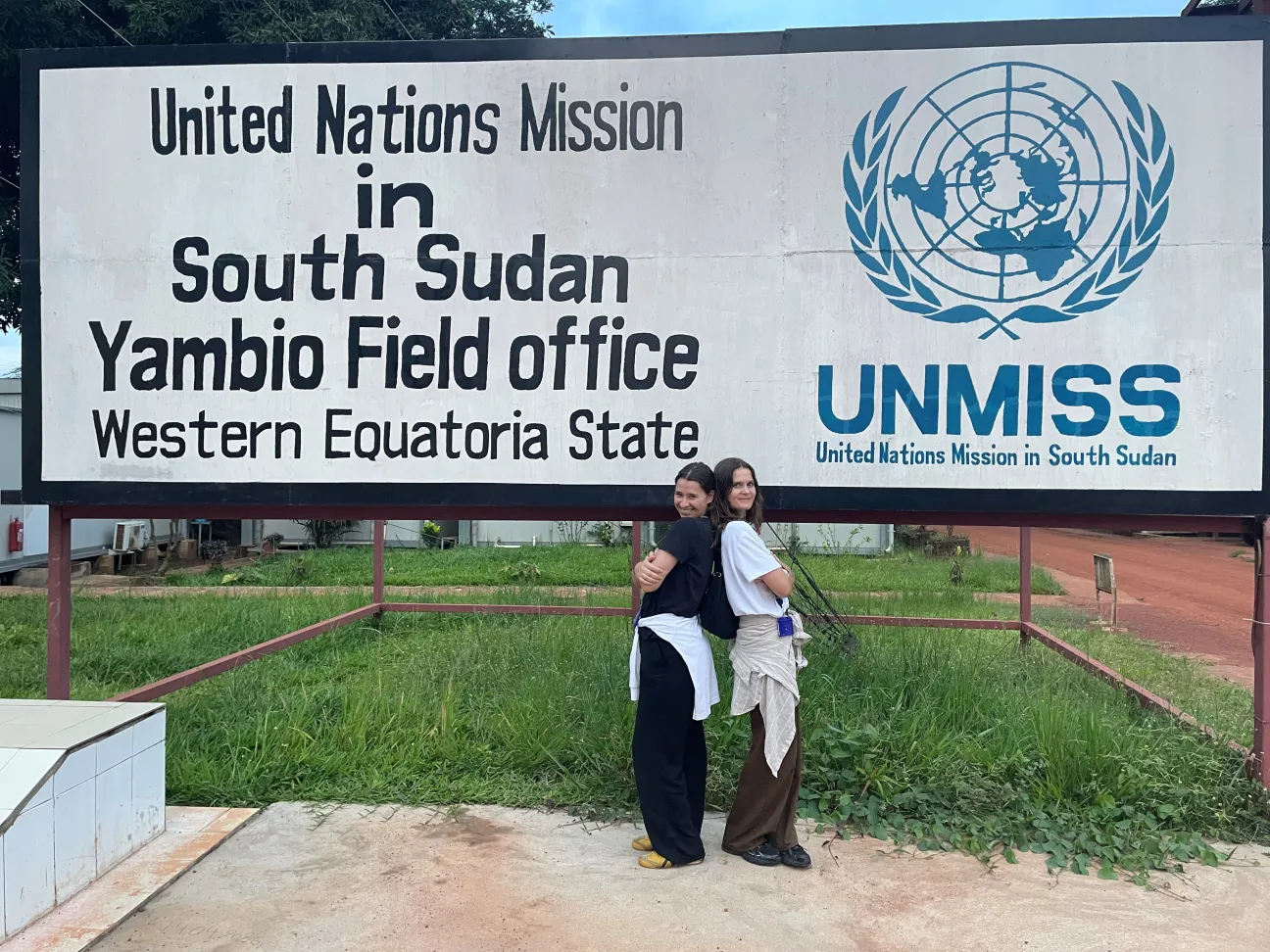
Linda: ’I think we would both encourage field epidemiologists to do it if they get the opportunity. It's a huge learning experience. You grow a lot professionally and personally. You meet great colleagues and friends. And it's good to get outside of the European surveillance bubble and see how epidemiology and preparedness is working in a low resource setting. Thematically it's the same work, but you have completely different challenges. You have to be practical about what is actually feasible, not what is a fancy solution or looks good. Make sure that you work closely with your local colleagues. Learn from them and then share your knowledge.’
Antonia: ’Before going, I sometimes wondered whether I had enough experience to really contribute to such a different and maybe also difficult setting. But for me it was a special experience with a very steep learning curve. It also gave me much more confidence in my own abilities. I realised that the fellowship and probably my previous work experience prepared me quite well for this. If you go with an open mind and the goal to contribute and learn as much as possible, then you can really make the best out of it.’
Background
- The EU Health Task Force (EUHTF) is an initiative to support countries in Europe and around the world by providing operational outbreak response and crisis preparedness related to communicable diseases or diseases of unknown origin. The EUHTF responds to specific requests coming from countries, from the European Commission or other international partners such as GOARN, including requests for emergency response, investigation of outbreaks, operational research, rapid identification of gaps in preparedness, expert advice, guidance, or simulation exercises.
- Linda and Antonia are fellows in the EPIET programme and the German Postgraduate Training for Applied Epidemiology (PAE), respectively. During their two-year fellowships, they are based at Germany’s national public health institute, the Robert Koch Institute (RKI), where they contribute to projects and routine activities in infectious disease epidemiology.
- The ECDC fellowship programme is a two-year programme that provides practical experience in field epidemiology and public health microbiology, mainly focusing on the surveillance, investigation, and control of infectious diseases across Europe:
- Field Epidemiology (EPIET) – training public health professionals to become specialists in intervention epidemiology.
- Public Health Microbiology (EUPHEM) – training microbiologists and other health professionals in public health microbiology.
- The training takes place at recognised training sites across the European Union/European Economic Area (EU/EEA).
- GOARN is a WHO network of over 360 technical institutions and networks globally that respond to acute public health events with the deployment of staff and resources to affected countries.
- The deployment was funded by the European Commission’s Civil Protection and Humanitarian Aid Operations department (DG ECHO).


