Key facts
Summary
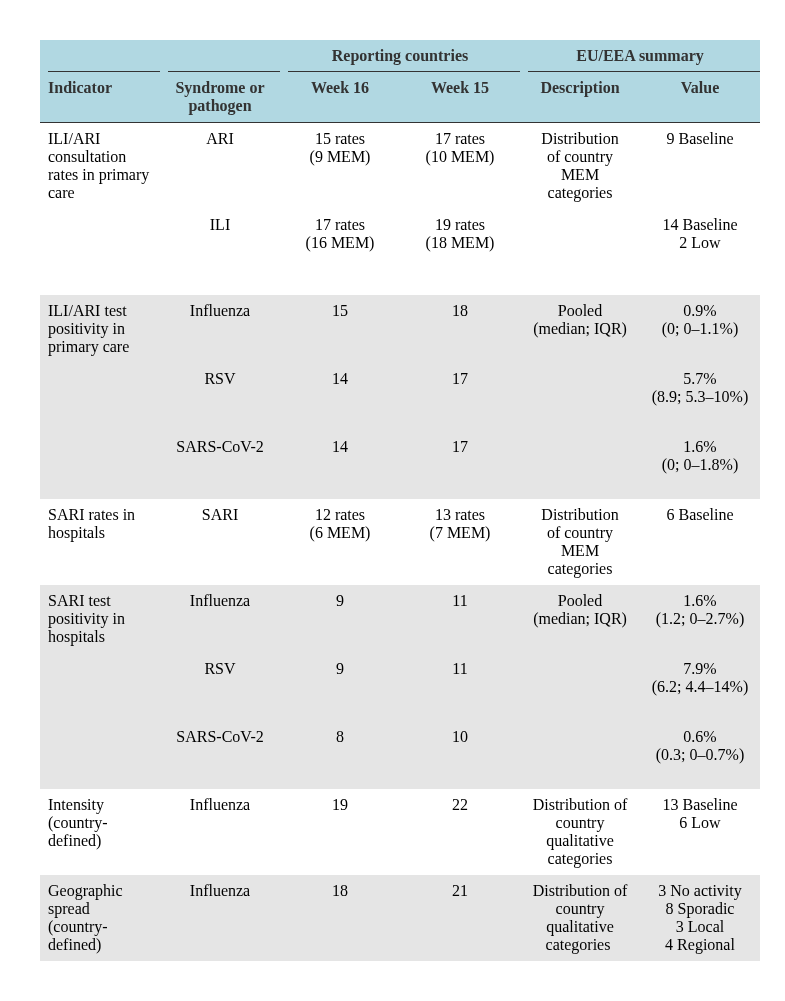
In week 16, 2026, the number of people reporting symptoms of respiratory illness is at baseline to low levels and continues to decrease across the EU/EEA.
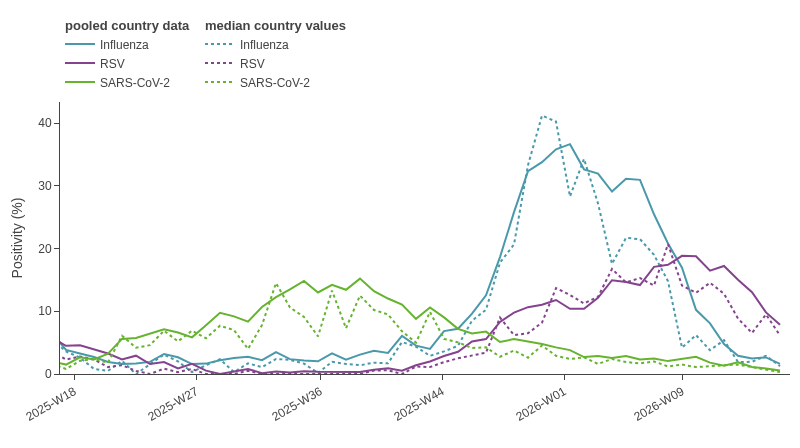
Respiratory syncytial virus (RSV) appears to be the main contributor to respiratory virus activity. Circulation is moderate but decreasing, and the seasonal peak has passed. Activity remains highest among children aged 0 to 4 years and adults aged 60 years and above, although trends suggest a general decline across all age groups.
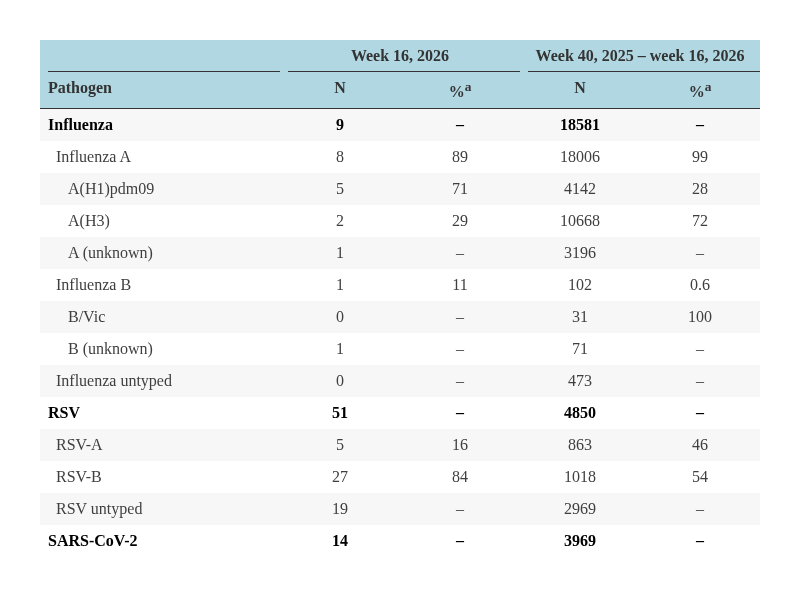
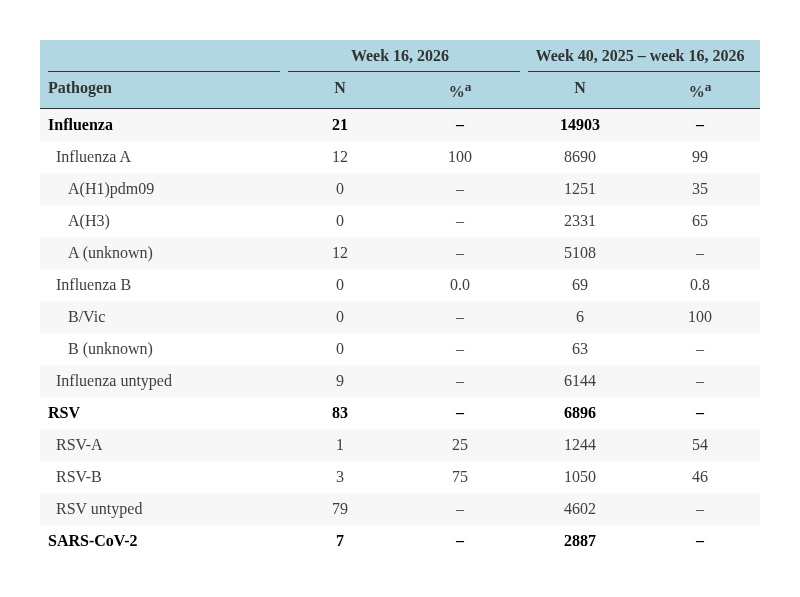
Influenza virus activity has returned to inter-seasonal levels in almost all countries, with low levels of detections and hospitalisations reported in all age groups.
SARS-CoV-2 activity remains at very low levels in all countries and all age groups, with no evidence of increased transmission at this time.
All data are provisional and may be affected by reporting delays, incomplete country data or low testing volumes. A few countries with high testing rates can disproportionately influence pooled data. Further information is available under ‘Country notes’ and ‘Additional resources’.
Overview
ECDC monitors respiratory illness rates and virus activity across the EU/EEA. Findings are presented in the European Respiratory Virus Surveillance Summary (ERVISS.org), which is updated weekly.
Key visualisation from the weekly bulletin are included below.