
Strengthening disease outbreak preparedness through partnership on joint scenario training
As rising global interconnection increases public health risks worldwide, the European Centre for Disease Prevention and Control (ECDC), building on the success of its previous programme through European Health Task Force (EUHTF), will once again host the Global Outbreak Alert and Response Network (GOARN) Outbreak Response Scenario Programme in Stockholm, Sweden, on 24-29 May.
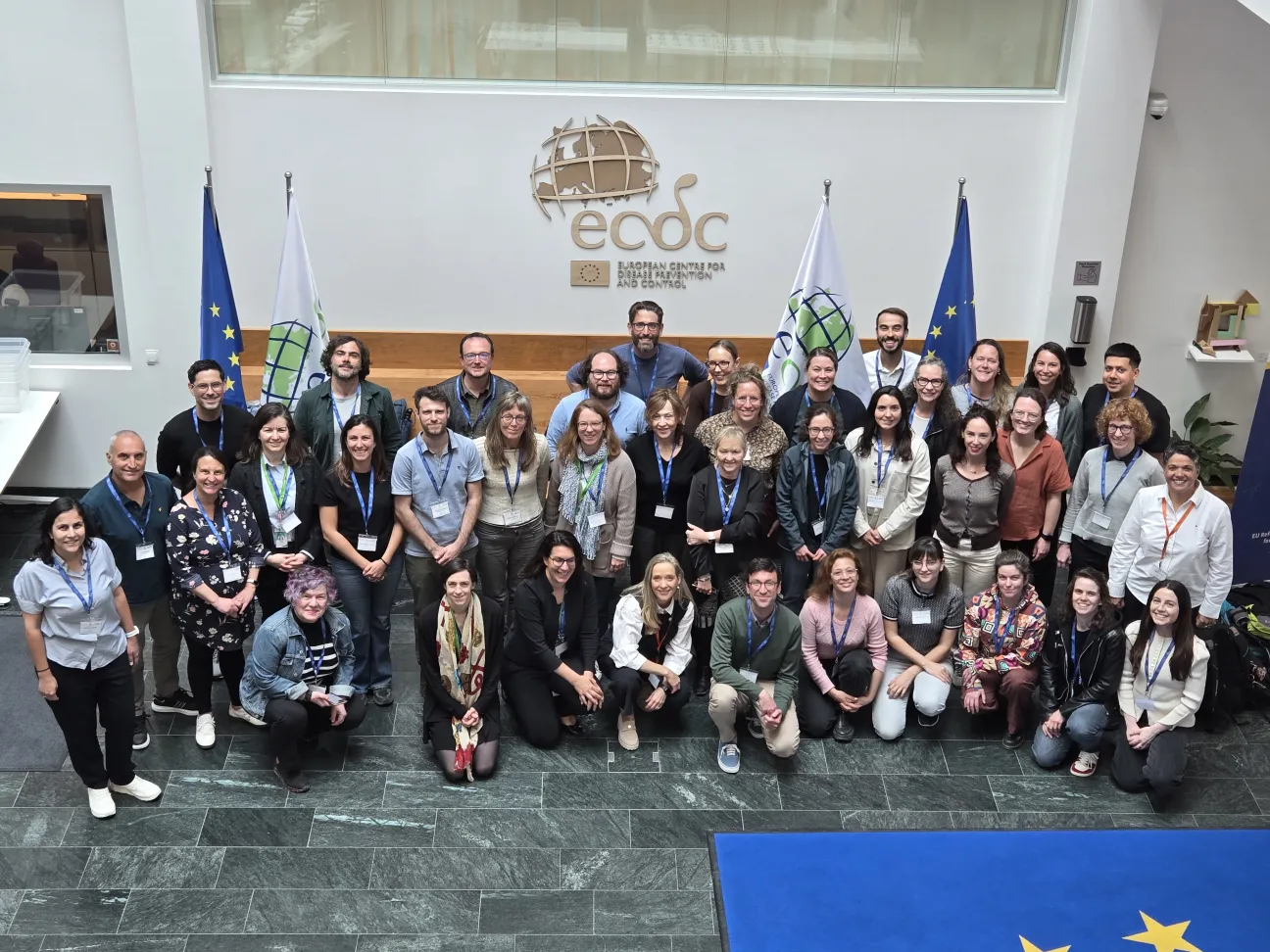
As rising global interconnection increases public health risks worldwide, the European Centre for Disease Prevention and Control (ECDC), building on the success of its previous programme through European Health Task Force (EUHTF), will once again host the Global Outbreak Alert and Response Network (GOARN) Outbreak Response Scenario Programme in Stockholm, Sweden, on 24-29 May.
The intensive five-day course is part of GOARN’s internationally recognised competency-based Capacity Strengthening and Health Emergency Workforce Development Programme. Through a realistic simulation of an evolving outbreak of unknown origin, participants will be immersed in the technical and operational realities of international outbreak response, working together in multidisciplinary teams under rapidly changing conditions.
Participants from a wide range of disciplines, including epidemiology, laboratory science, clinical management, infection prevention and control, animal health, and risk communication, will have the opportunity to strengthen essential rapid response skills such as leadership, communication, collaboration, coordination, and decision-making in complex emergency settings and high-pressure environments.
The critical importance of strengthening skills in preparedness and rapid response has been reinforced by recent international public health emergencies, underlining the need for sustained investment in preparedness, cross-border collaboration, and staff development.

In recent months, Europe has been involved in the management and follow-up of cases linked to the hantavirus infection outbreak on the cruise ship MV Hoondis, which required close coordination between countries, public health authorities, and international partners.
The current Ebola disease outbreak in the Democratic Republic of Congo and Uganda also demonstrates the need for a well-trained and rapidly deployable global outbreak response workforce to respond effectively to public health emergencies.
As a core GOARN partner, ECDC continues to strengthen collaboration with international partners and support the development of a connected, skilled, and agile outbreak response community across Europe and beyond.
This programme brings together public health experts from the European Union, Ecuador and Australia to strengthen global readiness for future health emergencies. Experts from Moldova, Georgia and Ukraine will also attend the programme as part of ECDC’s support for Health Resilience in the Eastern Partnership.
Notes
The Global Outbreak Alert and Response Network (GOARN), coordinated by the World Health Organization is a network of more than 360 institutions, including national public health agencies, technical organizations, and non-governmental partners, to support coordinated international action during outbreaks and other health emergencies.
Health Resilience in the Eastern Partnership is a three-year initiative (2025–2027), funded by the European Commission’s Directorate-General for Enlargement and the Eastern Neighbourhood (DG ENEST), which aims at strengthening health systems in Armenia, Azerbaijan, Georgia, the Republic of Moldova, and Ukraine – the EU Eastern Partnership (EAP) countries.


