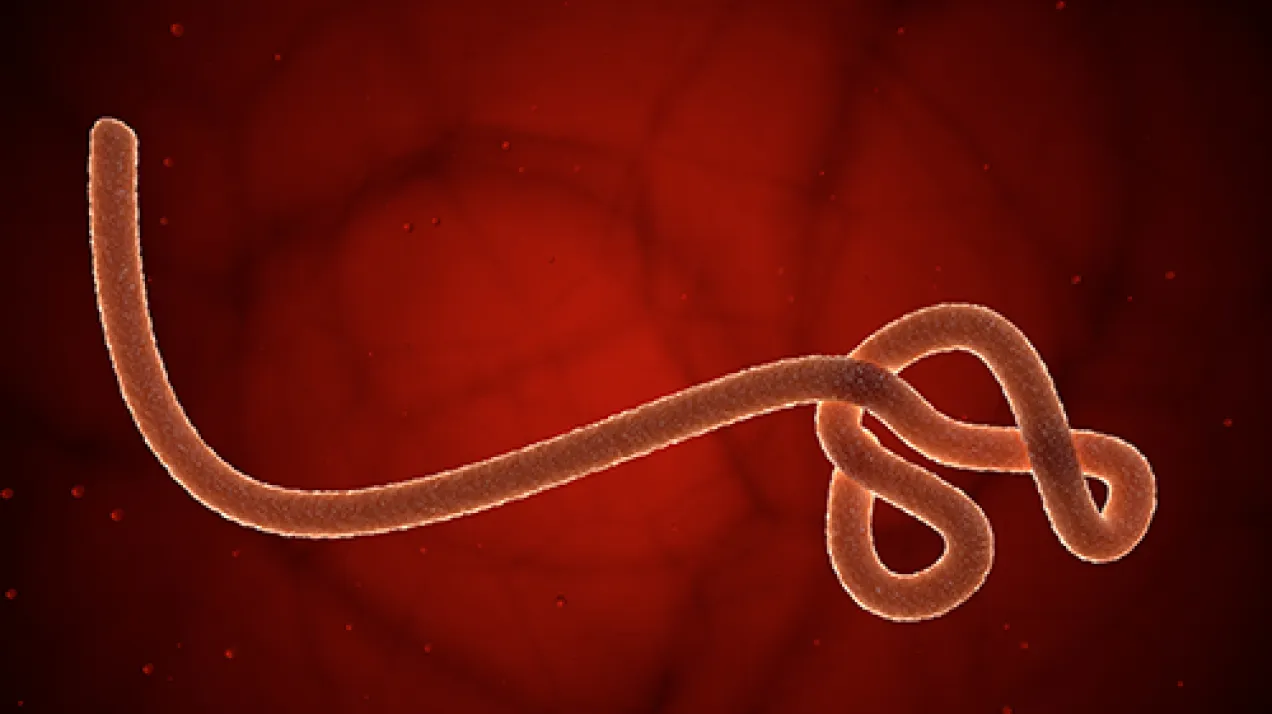
Threat assessment brief – Importation of Ebola disease cases caused by Bundibugyo virus to Kenya and Nigeria
Kenya and Nigeria have recently reported imported Ebola disease cases in their countries. In Kenya, the detection of an imported case was reported in Nairobi, where secondary cases were also reported. In Nigeria, a case in a person with travel history to Uganda was detected in Abuja. This has occurred in the context of the ongoing outbreak of Ebola disease caused by Bundibugyo virus (BDBV) in the Democratic Republic of the Congo (DRC), and cases reported in Uganda this spring.
This Threat Assessment Brief assesses the risk for people from the EU/EEA living in or travelling to the newly affected areas, and the overall risk for the general EU/EEA population. It is intended for public health authorities in the EU/EEA.
Epidemiological situation
On 20 October 2026, Nigeria reported one confirmed Ebola disease case caused by BDBV in a person who travelled from Uganda via an international flight on 3 October 2026. Symptom onset was on 7 October and the person was admitted to hospital on 11 October. The confirmation of Ebola disease caused by BDBV was made on 20 October. Contact tracing is currently under way, with 44 contacts being followed up.
As of 23 October 2026, Kenya has reported nine confirmed Ebola disease cases caused by BDBV, including one death. The first individual, reported on 6 October, developed symptoms while in DRC and travelled to Kenya via Uganda on 3 October. All eight secondary cases (four relatives and four healthcare workers) were linked to the first imported case and were in quarantine when they developed symptoms. Contact tracing activities are ongoing in Kenya, with all listed contacts (135 people) being followed up as of 22 October 2026.
As of 21 October 2026, 9 704 confirmed Ebola disease cases caused by BDBV, including 4 687 deaths, have been reported from eight provinces in DRC (data until 20 October 2026), where community transmission is still ongoing. In Uganda, a total of 20 cases, including two deaths were reported since 15 May 2026. The last confirmed case in Uganda was reported on 21 June 2026.
Risk assessment
The likelihood of infection for people from the EU/EEA living in or travelling to affected areas in Kenya and Nigeria is assessed as low, providing they adhere to recommended precautionary measures. Although infection with BDBV leads to severe disease at an individual level, the impact for people from the EU/EEA living in and travelling to affected areas in Kenya and Nigeria is considered low at the population level. Therefore, overall, the current risk for people from the EU/EEA living or travelling to affected areas in Kenya and Nigeria is considered low.
Based on the experience from the current and previous Ebola disease outbreaks in Africa, it is expected that the importation of cases to Europe will remain rare events and will mainly concern medical evacuations for treatment. The likelihood of secondary transmission of BDBV and sustained transmission within the EU/EEA following an imported case is considered very low, as cases are likely to be promptly identified and isolated, and recommended control measures would be implemented. The population-level public health impact in the EU/EEA is expected to be very low as only very few cases are expected. Therefore, the overall risk of BDBV for the general population in the EU/EEA is assessed as very low.
Recommendations
EU/EEA countries should remain vigilant, strengthen their preparedness and response capabilities for detecting and managing potential imported Ebola disease cases, and provide travel advice to people living in and travelling to/from affected areas.
ECDC does not recommend any travel restrictions for travellers to or from Kenya and Nigeria. Exit screening from the affected areas and countries, including symptom checks and exposure assessments is an important measure that contributes to reducing the risk by identifying symptomatic travellers before they board, and preventing them travelling while symptomatic.
Entry screening of incoming travellers from areas affected in the current outbreak is not proven to be an efficient measure to detect imported cases, and is also a highly complex public health intervention.
ECDC actions
ECDC continues to monitor the outbreak through its epidemic intelligence activities to provide epidemiological updates, situational awareness reports and risk assessments for the EU/EEA.
ECDC publishes regular updates on this outbreak on its website, as well as Questions and Answers documents for healthcare providers and the general public, laboratory guidanceand preparedness and communication tools for public health authorities.
ECDC is actively liaising with key partners, including Africa CDC, the European Commission, the World Health Organization, the European Union Delegation in Nigeria and Nigeria CDC to provide further support through the EU Health Task Force in response to the ongoing event in Nigeria.
Since 19 May 2026, the EU Health Task Force, in collaboration with the European Civil Protection and Humanitarian Aid Operations (DG ECHO), the Directorate-General for International Partnerships (DG INTPA) and the Global Outbreak Alert and Response Network (GOARN), has been deploying ECDC experts to Addis Ababa (Ethiopia) at Africa CDC’s headquarters, Kampala (Uganda), South Sudan and Bunia (DRC).
Threat Assessment Brief – Importation of Ebola disease cases caused by Bundibugyo virus to Kenya and Nigeria
English (259.9 KB - PDF)