
ECDC supports Belgium to strengthen national preparedness and response through a simulation exercise on a viral haemorrhagic fever outbreak
On 17 March 2026, ECDC supported a simulation exercise in Brussels, Belgium, designed to explore cross-sectoral collaboration and coordination when responding to a potential viral haemorrhagic fever outbreak.
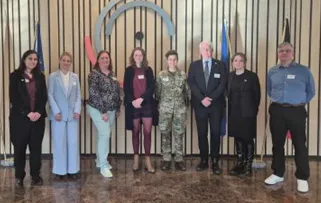
Following a request from Belgium’s Federal Public Service for Health, Food Chain Safety and Environment, ECDC deployed the EU Health Task Force to support organisation of a simulation exercise (SimEx) that aimed to identify instances of good practice, challenges and opportunities for improvement in the country’s viral haemorrhagic fever preparedness and response plan.
The exercise, based on an Ebola virus disease outbreak scenario, took place on 17 March 2026 and brought together all of the crucial Belgian stakeholders involved in preparedness and response to public health emergencies. This included participants from the hospital care, laboratory diagnostics, surveillance, crisis coordination, risk communication and points of entry sectors, as well as professionals from the police, national defence, air transport and rail transport.
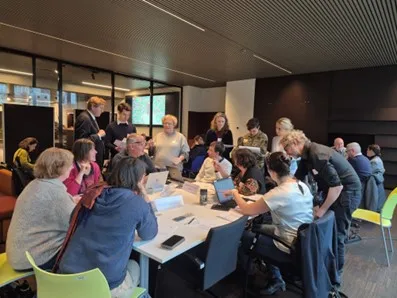
The exercise focused on:
- Cross-sectoral coordination and information exchange;
- Surveillance and early detection of imported cases; and
- Response measures such as contact tracing, containment, case management or laboratory diagnostics.
It also assessed the readiness of high-level isolation units in the two national reference hospitals, as well as approaches to risk communication – including managing media requests and rumours – and international collaboration.
The EU Health Task Force
The EU Health Task Force is a public health workforce coordinated by ECDC that can be deployed to provide rapid support to European Union/European Economic Area (EU/EEA) countries and beyond in response to public health threats related to communicable diseases or diseases of unknown origin. The Task Force strengthens preparedness and response capacity by deploying multidisciplinary teams to provide tailored technical assistance, as well as by organising training activities.
By bringing together expertise from across Europe, the Task Force enhances collaboration, facilitates experience and skill exchange, supports swift action during public health emergencies, and improves national and cross-border preparedness and response, thereby enhancing EU-wide resilience.


