
Regional workshop strengthens AI literacy for emergency management in the Eastern Mediterranean Region
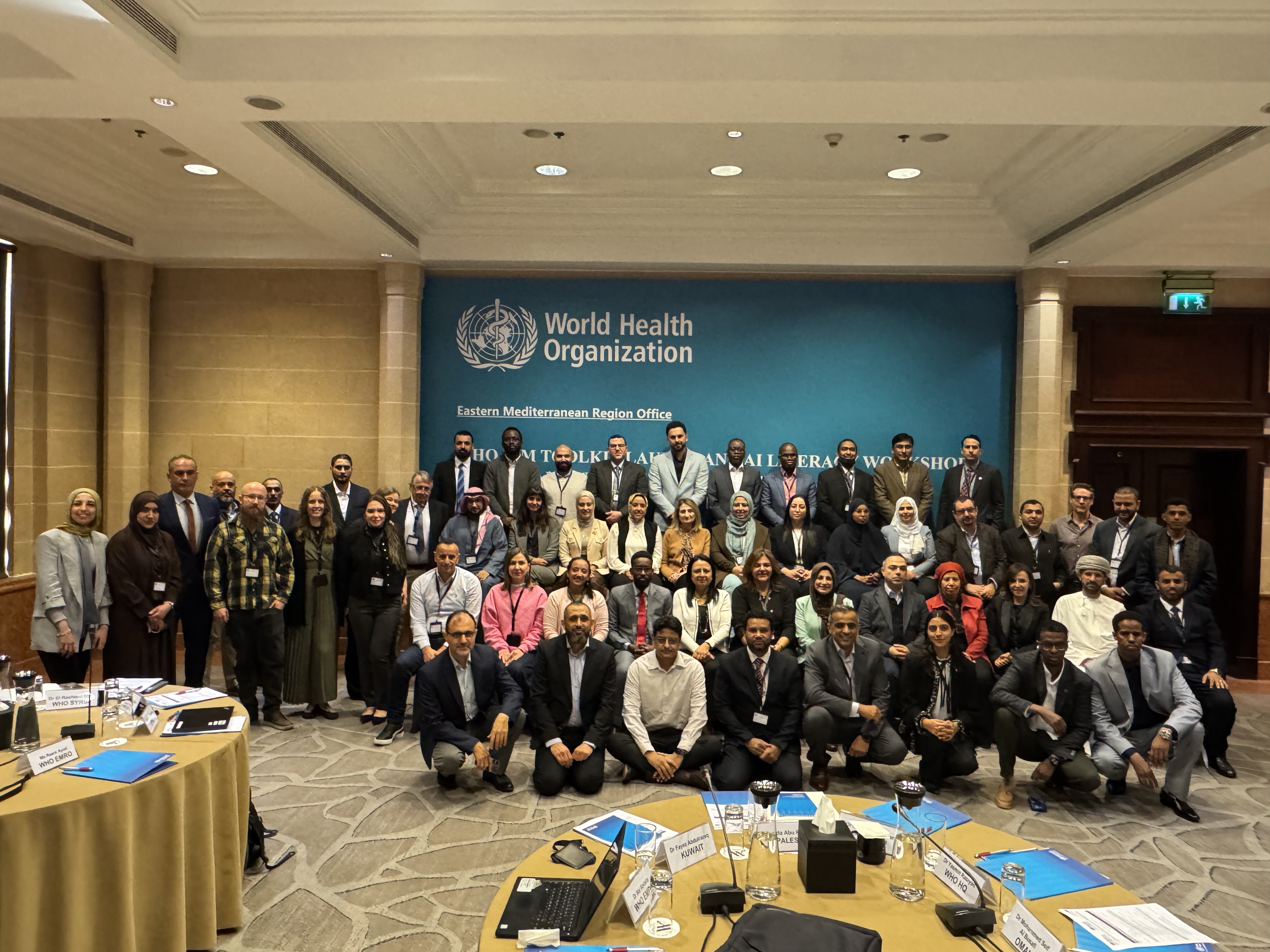
The event brought together representatives from WHO Country Offices and Ministries of Health from the Eastern Mediterranean region and other partners . It aimed to strengthen national capacities to detect, assess and respond to public health emergencies by introducing the AIM Toolkit and enhancing participants’ understanding of AI to support public health emergency preparedness cycle.
Over the four days, participants explored the vision, structure and practical use of the AIM Toolkit, which includes hazard and country profile templates, rapid risk assessment formats, communication plans, situational updates and monitoring frameworks. Participants shared feedback based on their operational needs, helping refine the toolkit and identifying areas where further contextualisation or support would be beneficial.
A dedicated two-day programme on AI literacy introduced participants to the foundations of AI, prompt engineering, risk mitigation, governance and ethics, data analysis, differences between open-source and commercial AI systems, and an AI readiness evaluation framework. Participants were presented with real-life examples on how to implement AI tools in emergency preparedness management, including for early warning and surveillance. In addition, practical exercises elaborated on the concepts presented throughout the two days.
Mr Enrique Delgado from ECDC highlighted that “the most important question to ask as public health experts on how to solve your challenges using AI is what level of uncertainty I am willing to accept”. Participants also discussed establishing a regional community of practice on AI to sustain collaboration and knowledge exchange.
In closing, a panel of speakers from the AI literacy workshop, including ECDC experts, discussed key themes that had been presented throughout the two days regarding risk management of AI technologies, the lack of alignment between the evolving pace of AI tools and capacity-building, the relevance of individual accountability in AI governance and risk management, alignment between real needs and AI solutions, and the interface between healthcare, public health and AI.
During this panel discussion, Dr Laura Espinosa from ECDC said: ‘We need to set a common understanding, a common language, between public health and AI experts.’
ECDC looks forward to continued collaboration with WHO and Member States in continuing AI capacity-building to further develop AI-supported approaches that reinforce preparedness and response capacities across the region.
Share this page